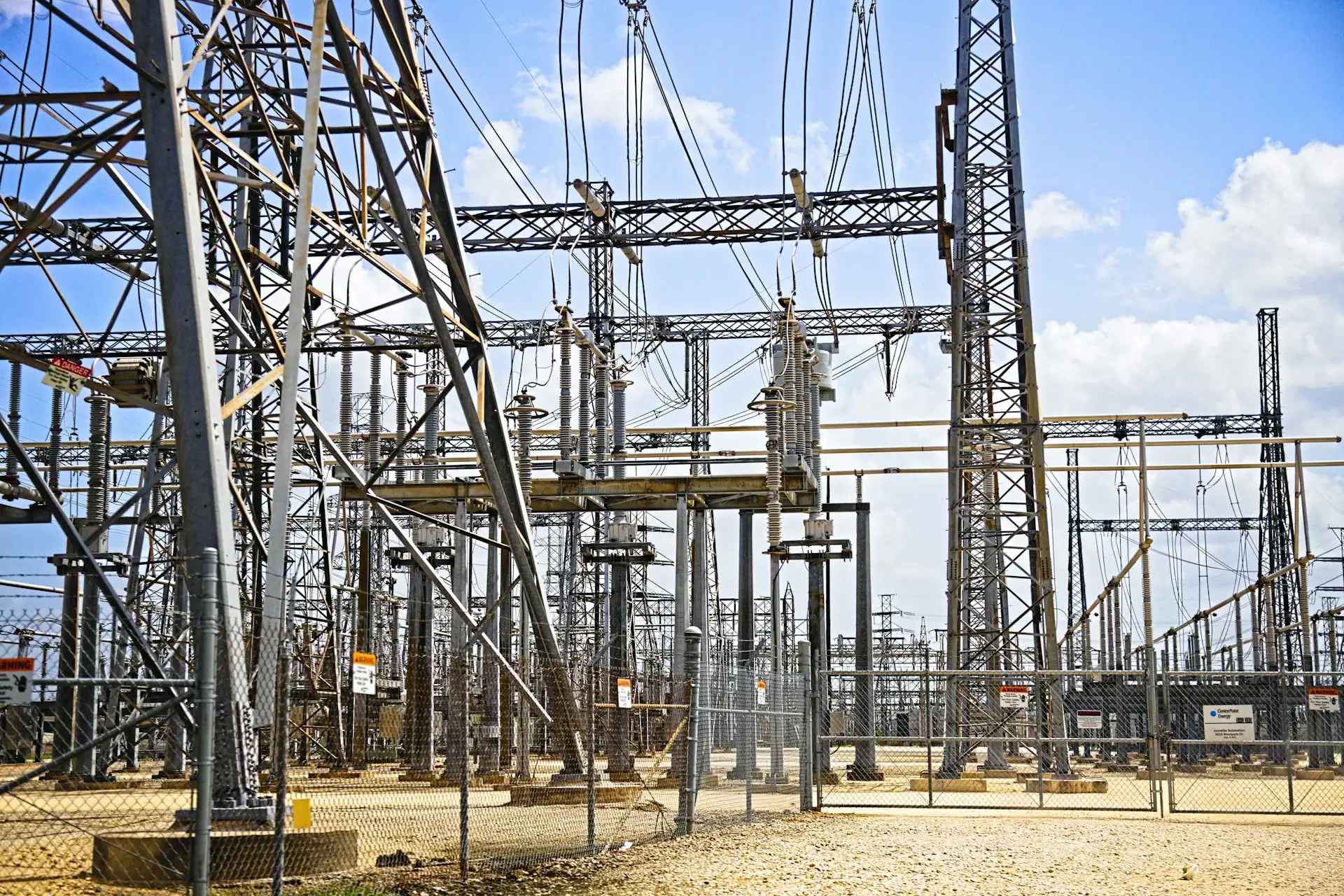
— Physical Security: More Than Protection – Strategies for a Resilient Future
Cameras, fences, locks — is that still enough? Why physical security today requires digital intelligence, and what resilient concepts look like in practice.
Read article

15.09.2026 | 6 min read
Physical security consulting is usually called in once a specific solution is already on the table: Which access control system do we need? How should the perimeter be protected? Do we need to add cameras?
That means the conversation often starts one question too late.
Before anyone decides on individual controls, three things have to be clear: what is being protected, which threats and dependencies are relevant, and what a security incident would actually do to operations. Only then can you establish what level of protection is appropriate.
The value of security consulting does not lie in producing as many recommendations as possible. It lies in translating protection objectives and risks into decisions the organisation can follow and defend.
For companies, that distinction matters. Good security consulting does not simply hand over a package of measures. It shows why a control is needed, what the alternatives are, which dependencies have to be accounted for and what residual risk remains.
Security consulting is the structured analysis of protection requirements, risks, existing controls and operational conditions, carried out to prepare sound decisions about physical security.
The scope varies widely with the question being asked. Security consulting services may assess an existing security architecture, examine risks systematically, develop an overarching security plan, or prepare the decisions that feed into later detailed design.
What matters is therefore not the label on the service, but the specific brief.
Before work starts, the following should be settled:
This demarcation matters because “security consulting” covers very different services in the market — from a compact site review to multi-year support for complex security programmes.
Not every security question calls for a full consulting project. At the same time, it is usually too late to start thinking about the security plan once specific systems have already been selected.
Demand for a security consultant typically arises in four situations.
Security programmes tend to grow over years. Buildings are extended, cameras added, access zones redrawn, new service providers brought in and processes adjusted.
Each individual change may have been sound. That does not mean the system as a whole still matches today’s protection requirements.
The questions that surface at this point are:
If the immediate goal is simply to establish where the weak points and the areas needing closer review are, a Resilience Health Check — a structured security analysis within an agreed scope — is often the better starting point. A full consulting project is not automatically step one.
New builds and major refurbishments are obvious triggers. Organisational change affects existing protection arrangements just as much.
Examples include:
Bringing in a security consultant early makes it possible to build requirements into planning and operations before technical or structural decisions become hard to reverse.
Early advice is not automatically cheaper. Its value depends on complexity, protection requirements and the size of the investment. On security-critical projects, though, it helps avoid later redesign work and isolated point solutions.
Break-ins, theft and sabotage are obvious triggers. Recurring irregularities are reason enough on their own:
After an incident, the visible weak point is rarely the whole story. The decisive question is whether a systemic problem sits behind it.
Depending on the business context, security measures may also be tied to regulatory, normative, insurance or contractual requirements.
These requirements must not be conflated.
ISO/IEC 27001 sets out the requirements for an information security management system and is built on a risk-based approach. Requirements under the German BSIG and NIS2 address cybersecurity and organisational risk management in particular. The German KRITIS Umbrella Act (KRITIS-Dachgesetz), by contrast, deals with the physical resilience of critical installations and — depending on how an operator is affected — calls for risk analyses and proportionate resilience measures.
For critical infrastructure operators this separation is especially important: there is no single “KRITIS certificate”. Which rules apply, and what they require, has to be assessed against the specific entity, installation and legal basis.
Security consulting helps translate technical requirements into a security and operating context. It does not replace legal advice, nor a formal regulatory or certification audit.
Security consulting is not a standardised package. Different services are required depending on the decision at hand.
A security analysis examines the current state and identifies weak points, risks and dependencies within an agreed scope.
It works either as a compact position assessment or as the starting point for a deeper engagement.
Here, relevant hazards, threat scenarios, vulnerabilities and potential impacts are examined systematically.
The goal is not to list every conceivable scenario. It is to identify and evaluate the risks that are genuinely relevant to the assets and processes in scope — which is what makes a security risk assessment useful rather than exhaustive.
Protection objectives and the risk assessment together define a target state.
A security plan describes, for example:
At this stage it answers the question of what protective effect is needed — not which specific product should be installed.
How these elements come together for a specific site is covered in the article on building security.
Detailed design turns conceptual requirements into a solution that can actually be built.
Depending on the project, that can include functional specifications, system architectures, interfaces, drawings, quantities, scopes of work or acceptance criteria.
Consulting and detailed design are closely linked but serve different purposes: the security plan defines the protective effect required. Detailed design specifies how it is delivered.
The exact scope of design work has to be agreed project by project.
A security consultant can also support the technical description of the services required and the technical evaluation of the bids that come in.
One boundary matters here: technical support during a tender or bid evaluation does not replace procurement law advice. Public-sector clients in particular must address legal procurement requirements separately.
Depending on the project, security consulting can extend into implementation.
That can include:
This kind of support earns its place on complex projects. It is not, however, a defining feature of professional security consulting.
Depending on governance, investment volume and protection requirements, a deliberate separation between consulting, design, installation and independent review can be the better arrangement.
There is no universal phase model. Method and depth have to match the question being asked.
A sound consulting process does, however, follow a traceable decision logic.
The starting point is not the site walk-through. It is clarifying the brief.
Which decision is the engagement meant to support?
For example:
The next step is to define which sites, buildings, processes, systems and interfaces form part of the investigation.
This scope definition prevents large volumes of information being gathered without a decision to support.
The next question: what actually needs protecting?
Protected interests may include:
Not every asset needs the same level of protection.
For operators of critical installations, this functional view is becoming more important: what counts is not only the installation itself, but the service or process whose failure would cause significant impact.
The baseline review draws on different sources of information depending on the project.
These can include:
The decisive comparison is between documented and lived security.
A formally clean process counts for little if it is not followed day to day. Conversely, informal arrangements that work in practice create risk when responsibilities and decision paths are undocumented.
Sound risk management involves more than rating events by likelihood and severity.
ISO 31000 describes risk management as a systematic process covering the identification, analysis, evaluation, treatment, monitoring and communication of risk, and expects that process to be adapted to the organisation and its context.
For physical security, the following are typically relevant, depending on the threat picture:
Where deliberate attack is concerned, risk cannot always be reduced to a statistical probability. Attackers choose their target, method and timing. The assessment method therefore has to fit the threat picture and the decision it serves.
For critical infrastructure, dependencies deserve particular attention. Both the European CER Directive (EU) 2022/2557 and the German KRITIS Umbrella Act follow a risk-based resilience logic that takes relevant natural and human-made risks — and dependencies — into account.
A risk analysis does not produce a technical solution on its own.
The first question is which protective function needs to improve.
Possible options include:
Security planning is systemic by nature.
ISO 22340 describes protective security accordingly, as the interplay of governance, personnel, information, cyber and physical security. ISO 22342 sets the development of security plans in the context of organisational risk management.
Which controls are suitable depends on the protection requirements and the operating context.
Not every weak point carries the same weight, and not every improvement has to be made immediately.
A sound action plan should therefore distinguish clearly between:
For every relevant control, the objective, priority, ownership and any outstanding decision should be visible.
Larger investments warrant a comparison of options. That comparison should not stop at capital cost. It should also cover:
The value of a security consulting engagement is not measured in the page count of the final report.
What counts is whether the client can make better decisions afterwards.
Depending on the brief, suitable results include:
Results also have to be usable at different decision levels.
The board needs a defensible basis for setting priorities and releasing investment. Technical owners need requirements concrete enough to act on.
Consulting quality cannot be read off a brand name or a single certification.
Several criteria matter.
The first conversation should establish which question is to be investigated.
Specific product recommendations made before protection requirements, site and risks are understood need explaining.
Companies should be able to understand:
A method does not have to be maximally complex. It has to fit the decision at hand and be applied consistently.
A recommendation should make clear:
Terms like “best practice” or “state of the art” are not a substitute for that reasoning.
References are worth something when they are genuinely comparable to your own project.
Relevant factors include:
Formal qualifications and certificates are useful indicators of competence. They do not replace checking whether the experience and method fit the task.
Professional consulting should name:
At the interfaces with data protection, fire safety, occupational safety, IT/OT security, building law or specialist regulatory questions, an interdisciplinary approach is often necessary.
Video surveillance, biometric access control and personal access data, for instance, bring data protection requirements of their own. Physical security consulting does not replace an independent data protection assessment.
Vendor independence is frequently cited as a mark of quality in security consulting. The label alone is not enough.
A company can advise independently of particular products or manufacturers and still have a commercial interest in taking on the design, integration or operation later.
That is not a problem in itself. It does have to be transparent.
Clients should therefore check:
An integrated delivery model has real advantages: fewer interfaces and end-to-end technical accountability. Where investment is large or protection requirements are especially critical, an additional independent review is worth the effort.
The question is not whether everything comes from one supplier. It is whether roles, interests and decisions are governed transparently.
These services should be clearly separated at the point of contracting.
Security consulting analyses protection requirements, risks and options, and prepares decisions.
Detailed design specifies requirements far enough that technical or structural measures can be built.
Installers and integrators deliver the planned systems and make them work technically.
Security services handle operational tasks such as reception, patrols, alarm follow-up, intervention and guarding.
Audit and testing assesses, within a defined scope, whether stated requirements are met or particular controls have been implemented effectively.
These roles can sit with different companies or within an integrated delivery model. What matters is not the organisational form, but a clear definition of scope, responsibility and interfaces.
Most later misunderstandings arise not during the analysis, but from a poorly defined brief.
Before appointing a consultant, settle at least the following:
That turns security consulting itself into a controllable process.
These are exactly the points we work through with you: objective, scope, depth of review and expected results are agreed together, before any conversation about services or controls. Get in touch — the initial conversation is without obligation.
Not every organisation needs a full risk analysis or a new security plan straight away.
Where the immediate question is how robust the existing security architecture is, the Resilience Health Check is a suitable entry point.
Within an agreed scope, it examines physical and organisational security, identifies weak points, makes an initial risk classification and derives prioritised recommendations.
Deeper security consulting is typically required when:
The Health Check and security consulting are not competing services. They work at different depths and build on one another.
e-shelter security supports organisations in analysing and developing their physical security structures.
Depending on the starting position and the question, the entry point is either the Resilience Health Check or a deeper consulting engagement. The aim in both cases is to translate protection requirements, risks and operational conditions into requirements and decision records the organisation can act on.
What follows from that — developing the security plan, detailed design or implementation support — depends on the project and is scoped accordingly. Explore our solutions for the full service picture.
The central question in a security consulting engagement is not: which security technology should we buy?
It is: which risks do we have to control, what level of protection does that require, and which controls are appropriate under our operating conditions?
Only on that basis can technical, structural, organisational and personnel measures be evaluated sensibly.
Sound security consulting therefore does more than make recommendations. It sets out the assumptions behind them, the alternatives available, the interests involved and the residual risks that remain.
Its real value lies in the organisation’s ability to decide.
Good security consulting does not simply supply a solution. It makes clear why a particular decision fits the protection requirements at hand.
e-shelter security designs, integrates and operates physical security independently of any manufacturer — from risk analysis through technical design to certified operation. If it is still open how deep the review needs to go, the Resilience Health Check is the fastest way in. If the question is already defined, talk to our experts directly.
You need to load content from reCAPTCHA to submit the form. Please note that doing so will share data with third-party providers.
More InformationYou are currently viewing a placeholder content from Turnstile. To access the actual content, click the button below. Please note that doing so will share data with third-party providers.
More InformationYou are currently viewing a placeholder content from Facebook. To access the actual content, click the button below. Please note that doing so will share data with third-party providers.
More InformationYou are currently viewing a placeholder content from Instagram. To access the actual content, click the button below. Please note that doing so will share data with third-party providers.
More InformationYou are currently viewing a placeholder content from X. To access the actual content, click the button below. Please note that doing so will share data with third-party providers.
More Information