

AUTOMATED PHYSICAL ACCESS CONTROL
Modern physical access control governs entry to defined security zones based on clear role and authorization concepts. Digital processes, multi-factor authentication, and the management of access rights enable traceable, audit-proof control of every access event.
Access control systems are embedded into higher-level management platforms and aligned with organizational processes. For digital identity verification and visitor processes, we integrate specialized platform solutions — including through our partner essentry — and connect them to existing security architectures.
The result: structured, transparent, and scalable access processes — from employee badges and transponders to temporary visitor authorization.
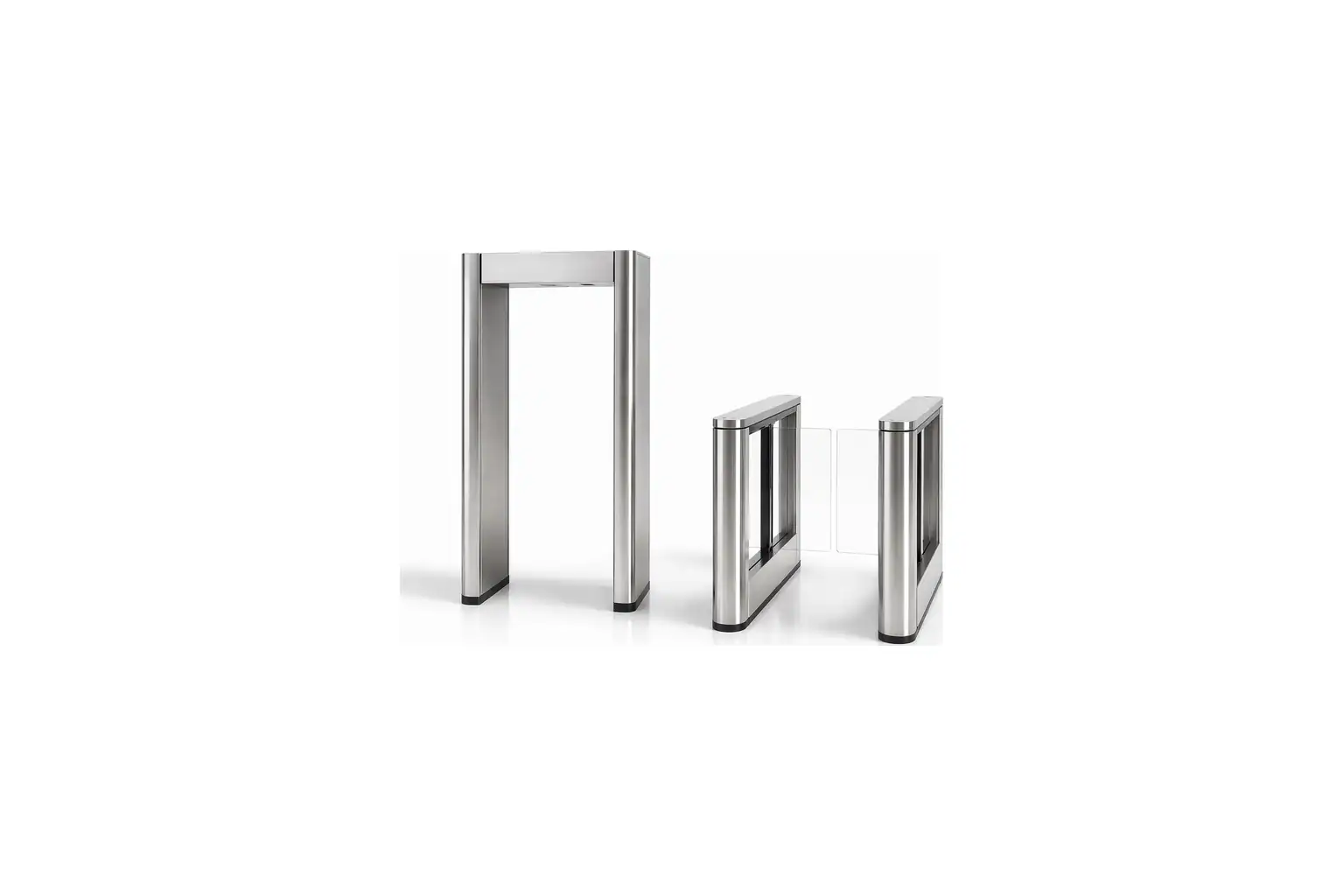
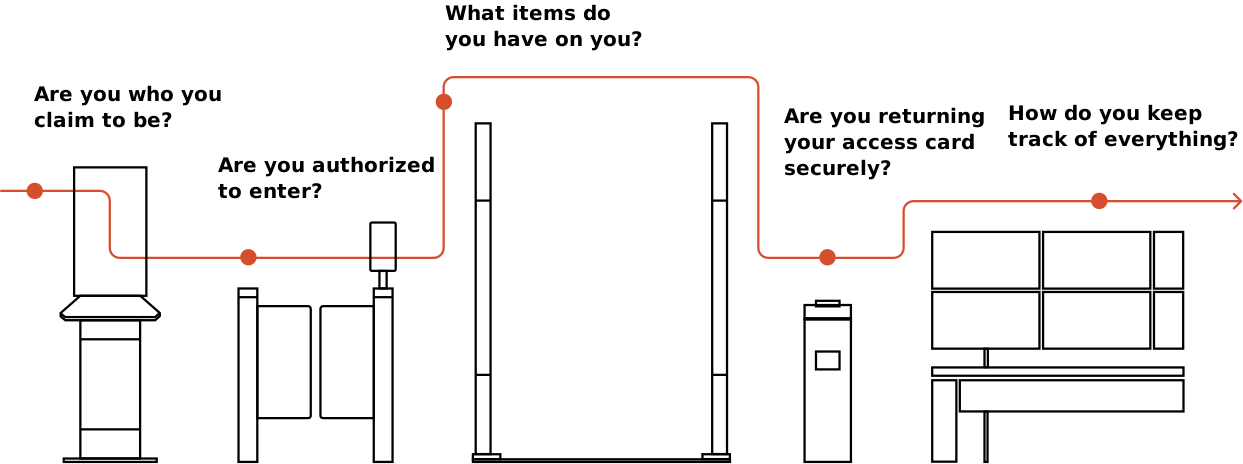
Automated physical access control is a core building block of an innovative security architecture. Combining the highest security standards with efficiency and transparency creates smooth operations in sensitive environments.

Role-based
permissions

Multi-factor
authentication

Traceable
access logs

Automated
visitor management
Automated physical access control governs access to defined areas based on digital identities, roles, and permissions. Depending on the level of protection required, individuals are verified via badges, PIN, mobile credentials, or biometric methods. The system checks whether a person is authorized for a specific area at a specific time, grants or denies access, and documents the event in a traceable way.
In complex security environments, physical access control is often connected with visitor processes, video surveillance, intrusion detection, or higher-level platforms such as Physical Security Information Management (PSIM) and Video Management Systems (VMS).
Access control ensures that only authorized individuals gain entry to defined buildings, areas, or security zones. It protects people, assets, information, and critical business processes from unauthorized access, tampering, sabotage, or theft.
At the same time, it creates a traceable record of access events. Depending on the context, this can be relevant for audits, security assessments, incident investigation, and compliance requirements.
A modern access control system typically consists of credentials, readers, door controllers, control panels, physical barriers, and central management software. Depending on security requirements, credentials can include RFID cards, employee badges, visitor badges, mobile credentials, PINs, or biometric features.
In security-critical environments, access control systems are often networked with entrance control systems (such as turnstiles and speed gates), video surveillance, intrusion detection systems, visitor management, and higher-level platforms such as Physical Security Information Management (PSIM). What matters is not the individual component, but the coordinated interplay of authorization model, technology, operations, and monitoring.
Access control can be implemented in different ways depending on the required level of protection. Card-based systems use RFID or NFC badges, for example. Mobile access solutions rely on smartphone apps or wallet-based credentials. PIN methods are often used as an additional factor.
Biometric access control uses features such as fingerprint, face, iris, or vein pattern. It is especially suitable where a claimed identity needs to be additionally verified. In security-critical areas, multi-factor methods are common — for example, badge plus PIN, or badge plus biometric verification. Which option is appropriate depends on the level of protection required, the user group, the data protection framework, and the operational environment.
Automated physical access control is used primarily where large numbers of people, differing permissions, or elevated security requirements come together. Typical areas of application include data centers, critical infrastructure, energy utilities, industrial sites, logistics centers, research facilities, corporate campuses, and public institutions with elevated protection needs.
It is particularly relevant when permissions must not only be assigned once, but continuously managed, adjusted, reviewed, and documented.
Yes — modern access control systems can be integrated into existing security and IT environments. Depending on the architecture, this includes video surveillance, intrusion detection, visitor management, control-room solutions, HR systems, or higher-level platforms such as Physical Security Information Management (PSIM) and Video Management Systems (VMS).
Integration should be planned vendor-independently and aligned with existing processes. The goal is a security architecture in which permissions, access events, alarms, and operational processes are brought together consistently.
e-shelter security supports organizations with automated physical access control — from analysis and design through installation and integration to ongoing operation. This includes electronic access control systems, authorization concepts, biometric methods, automated visitor management with essentry, interfaces to existing security platforms, and connection to security control rooms.
The solutions are planned vendor-independently and tailored to the level of protection required, the site structure, operational processes, and regulatory requirements — particularly for data centers, critical infrastructure, and other security-critical environments.
You need to load content from reCAPTCHA to submit the form. Please note that doing so will share data with third-party providers.
More InformationYou are currently viewing a placeholder content from Turnstile. To access the actual content, click the button below. Please note that doing so will share data with third-party providers.
More InformationYou are currently viewing a placeholder content from Facebook. To access the actual content, click the button below. Please note that doing so will share data with third-party providers.
More InformationYou are currently viewing a placeholder content from Instagram. To access the actual content, click the button below. Please note that doing so will share data with third-party providers.
More InformationYou are currently viewing a placeholder content from X. To access the actual content, click the button below. Please note that doing so will share data with third-party providers.
More Information